Help Musa Masala fund their free healthcare and dental camp in Nepal: https://musamasala.myshopify.com/products/altitude-hypothermia-heat-illness-tips-cards-5-pack
Full Writeup
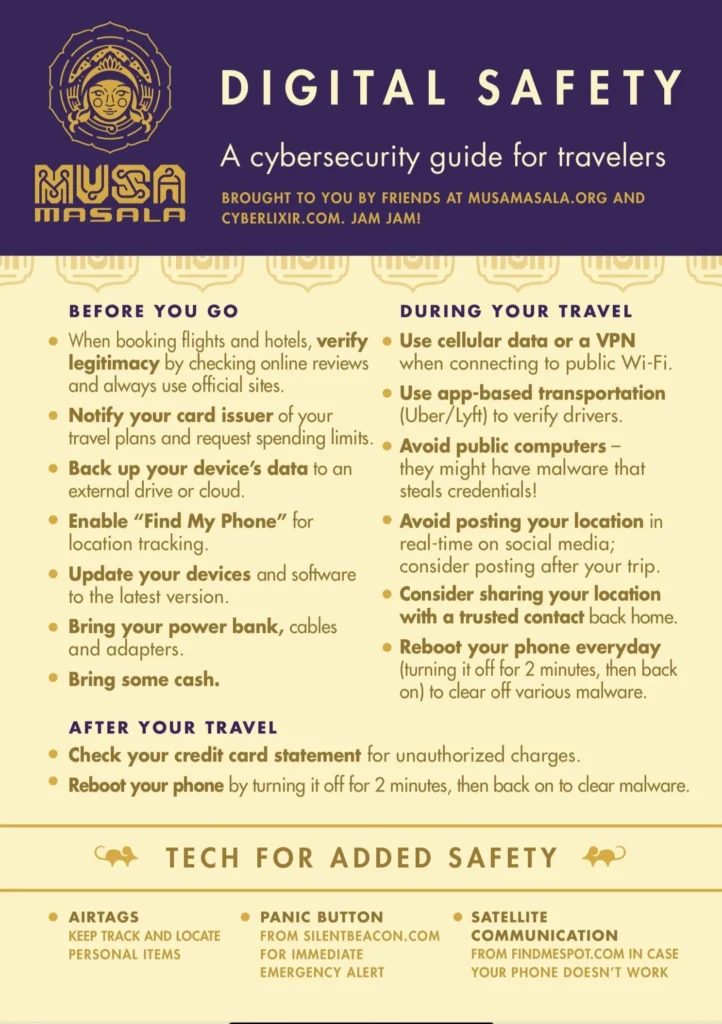
Before You Go
1. Book Flights and Hotels Securely:
When booking travel accommodations, use only official airline or hotel websites. Third-party booking sites may have bad security standards, and scammers can set up fake booking sites with great deals to steal your credit card info. If you’re using Third-party sites, verify its legitimacy by checking reviews.
2. Research Prices in Incognito Mode:
Using incognito mode while researching flights and hotel prices helps prevent websites from tracking your searches and potentially inflating prices based on your browsing history.
3. Notify Your Card Issuer and Set Withdrawal Limits:
Inform your bank of your travel plans and consider setting lower withdrawal limits. These steps reduce the risk of fraud and allow your bank to alert you to any suspicious transactions.
4. Backup Your Data:
Before you leave, backup your devices to an external drive or cloud storage. Most phones are backed up automatically but you can check to see what’s been backed up in Settings > search for “Backup”
5. Enable “Find My Phone”:
Activating device location tracking like “Find My Phone” helps you locate a lost device or erase its contents if needed. Go to Settings > search “Find my” to make sure you have it on.
6. Update Devices and Software:
Keeping your devices and applications up-to-date provides vital security patches and helps protect you from the latest malware and hacking methods.
7. Pack Essential Tech Accessories:
Bringing a power bank, charger, USB cables, and an AC adapter ensures you won’t have to rely on potentially unsafe public charging stations.
8. Bring Cash for Emergencies:
Cash can be a safeguard against card skimming and a practical backup if you need to freeze your card due to theft.
9. Establish Check-In Times with a Trusted Contact:
Setting regular check-in times with a friend or family member back home provides a safety net, alerting them if something is amiss.
10. Check Government and Travel Safety Sites:
Stay updated on any relevant travel warnings or event notifications from official government or travel websites. If you’re in the US, check the US Department of Travel Advisory: https://travel.state.gov/content/travel/en/traveladvisories/traveladvisories.html/
During Your Travel
1. Keep Devices with You:
Never leave devices unattended. If you must, lock them securely in your suitcase. Many thefts occur in transit locations where devices are left briefly unattended.
2. Use Cellular Data or a VPN on Public Wi-Fi:
VPN enhances your privacy – preventing potential hackers from seeing what websites or apps you’re using. However, you don’t need to worry about your bank details or password being seen without a VPN because this data is encrypted. We recommend ProtonVPN or Mullvad. For more information about VPN and what it does, check out our resource page.
3. Avoid Public ATMs:
Public ATMs are prone to card skimming. Use ATMs inside bank branches or bring cash to avoid risky withdrawals altogether.
4. Verify Drivers on App-Based Transportation Services:
When using ride-hailing apps like Uber or Lyft, verify your driver and vehicle information carefully to avoid impersonation scams.
5. Avoid Public Computers:
Public computers, like those in internet cafes, may contain malware that steals your credentials. Use your own device whenever possible.
6. Delay Real-Time Social Media Updates:
Posting in real-time can reveal your current location to a wide audience. Instead, share your experiences after you’ve moved on from a location.
7. Avoid Random QR Codes:
Some QR codes in public spaces (like posters) may contain malicious links. Only scan QR codes from trusted sources.
8. Share Live Location with a Trusted Contact:
Share your live location with a trusted contact for extra safety in case of emergencies. You can set this up with Whatsapp.
9. Reboot Your Phone Daily:
Rebooting your phone (turning your phone off for 2 minutes, then turning it back on) clears temporary files, cache, and potential malware, adding a layer of security each day.
After Your Travel
1. Review Credit Card Statements:
Check your bank and credit card statements for any unauthorized charges and report them immediately if found.
2. Reboot Your Phone Again:
A post-travel reboot helps ensure any residual malware or software glitches are removed from your device.
Tech for Added Safety
1. Airtags for Tracking Personal Items:
Small tracking devices like Airtags help locate lost luggage or personal items during travel.
2. Silent Beacon Panic Button:
Devices like the Silent Beacon offer instant emergency alerts to contacts without needing to unlock your phone. (https://silentbeacon.com)
3. Satellite Communication:
Satellite communication devices are helpful when you’re in remote areas with poor cellular service, providing a lifeline in case of emergencies. (https://www.findmespot.com)
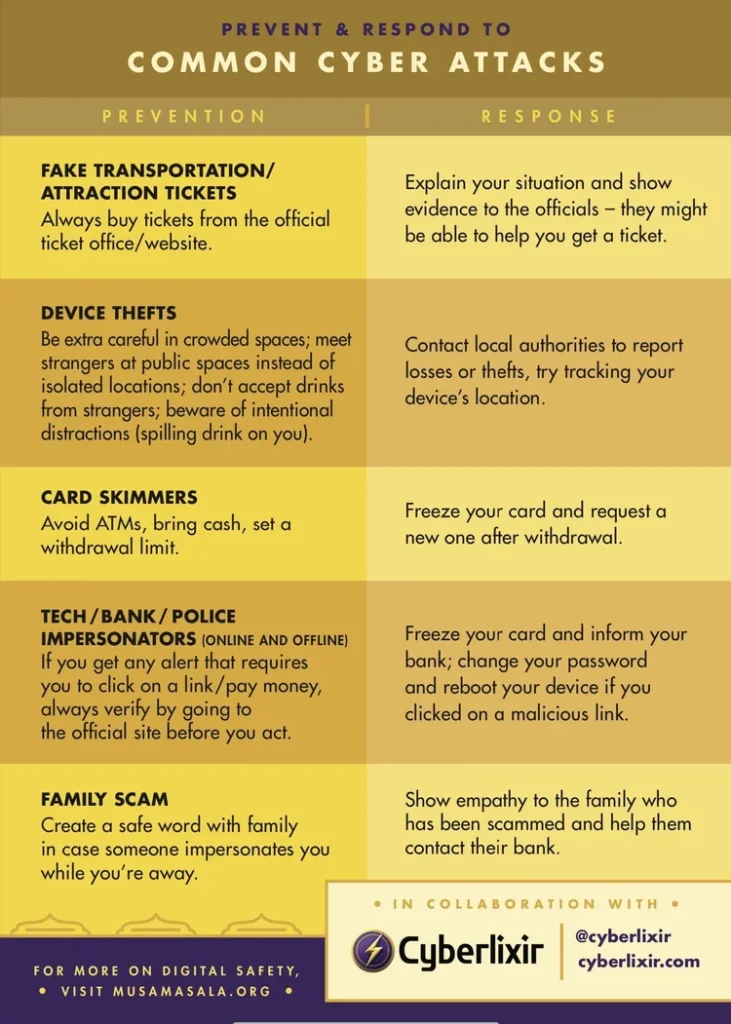
Preventing & Responding to Common Cyber Attacks
Fake Transportation/Attraction Tickets:
- Prevention: Only buy tickets from official websites or physical offices.
- Response: If scammed, show any evidence to the venue staff—they may assist you in obtaining valid tickets.
Device Thefts:
- Prevention: Stay vigilant in crowded places, avoid isolated locations, don’t accept drinks from strangers, and watch for distractions that could lead to theft.
- Response: Track your device with location services and contact local authorities—do not attempt recovery alone.
Card Skimmers:
- Prevention: Use ATMs in secure locations, digital wallets, bring cash, and set withdrawal limits.
- Response: Report unauthorized charges immediately to your bank, freeze your card, and request a replacement if necessary.
Tech/Bank/Police Impersonators (Online and Offline):
- Prevention: Always verify the identity of individuals or alerts by visiting official websites directly.
- Response: Freeze your accounts, inform your bank, change any compromised passwords, and reboot your device if necessary.
Family Scams/Grandparent Scams:
- Prevention: Set up a safe word with family members for verification purposes.
- Response: Offer support to affected family members and assist them in reporting the scam.
Conclusion
By taking a few simple steps before, during, and after your trip, you’re protecting your info, avoiding common scams, and setting yourself up for a smooth, worry-free experience! With these tips in mind, you can relax and dive into the adventure, knowing your digital life is secure and you’re ready for anything that comes your way!